
Library
Embroidered Logos vs Heat Transfer
Jul
A logo that looks sharp on a sample can behave very differently once it is rolled out across polos, fleeces, softshell jackets and hi-vis clothing. That is why embroidered logos vs heat transfer is not just a branding choice. For most businesses, it affects garment suitability, long-term appearance, wearer comfort and the total cost of keeping uniforms consistent.
If you are ordering branded clothing for multiple teams, the right method depends on what the garment needs to do in the real world. Reception staff, warehouse operatives, site teams and front-of-house employees place very different demands on workwear. A branding method that works well for one role may be a poor fit for another.
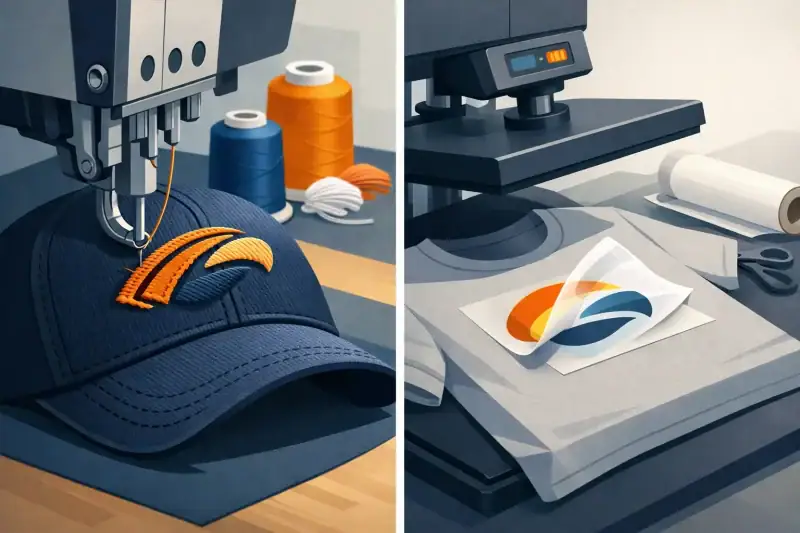
Embroidered logos vs heat transfer – what is the difference?
Embroidery stitches the logo directly into the garment using thread. It creates a textured, premium finish that is widely used on polos, shirts, knitwear, fleeces, caps and many types of corporate clothing. It is often chosen when businesses want a professional, long-lasting look that holds up well over repeated wear.
Heat transfer applies the logo to the surface of the garment using heat and pressure. Depending on the artwork and application, this can produce a smooth, flat result with strong visual clarity. It is commonly used where fine detail matters, where the garment fabric is not ideal for embroidery, or where a lighter branding finish is preferred.
Neither option is automatically better. The more useful question is which one is better for the garment, the job role and the image you want the uniform to project.
When embroidery is the better choice
Embroidery is often the first choice for businesses that want branded workwear to look established and dependable. The raised finish gives logos presence without appearing overly bold, which suits many corporate, hospitality and customer-facing environments.
On garments such as polos, sweatshirts, fleeces and heavier shirts, embroidery tends to perform well because the fabric can support the stitching. The result usually feels durable and considered. For businesses investing in uniforms as part of a wider brand presentation, embroidery often helps create that polished, long-term impression.
There is also a practical advantage. Embroidered logos generally cope well with frequent laundering and regular wear when matched to the right garment. In settings where uniforms are used repeatedly over long periods, this can make embroidery a sound commercial choice rather than simply an aesthetic one.
That said, embroidery has limits. Very small text, colour gradients and intricate detailing do not always translate cleanly into thread. Stitching can also add weight or tension to lighter fabrics. On some garments, especially thin performance materials, that can affect comfort or the way the fabric sits.
Where heat transfer makes more sense
Heat transfer is often the better solution when logo detail is the priority. If your branding includes small lettering, fine outlines or more complex artwork, transfer can reproduce it more accurately than embroidery. This matters when brand standards are tight and visual consistency is important across every garment type.
It is also well suited to technical and lightweight clothing. Softshells, activewear, waterproofs and certain hi-vis garments may benefit from a branding method that does not involve stitching through the fabric. In those cases, transfer can preserve the performance and feel of the garment more effectively.
For larger logos, heat transfer can also be a cleaner option. A big embroidered design on the back of a garment may feel heavy and stiff, whereas a transfer can deliver impact without adding the same bulk. This is one reason many organisations use transfer for back branding and embroidery for a smaller chest logo.
There are trade-offs here as well. Heat transfer can be highly durable when applied properly and cared for correctly, but longevity depends on the garment, the transfer type and the washing conditions. In harsher industrial use, the wrong transfer on the wrong garment can show wear sooner than embroidery.
Durability depends on the job, not just the method
Decision-makers often ask which option lasts longer. The honest answer is that durability is not only about embroidery versus transfer. It is about how the garment is worn, how often it is washed and whether the branding method is appropriate for the fabric.
For a smart polo worn in an office, showroom or hospitality setting, embroidery may remain the strongest all-round option over time. For a lightweight jacket used by mobile teams, a well-chosen heat transfer may be the more reliable route because it works with the garment rather than against it.
This is where experienced garment selection matters. A branding method should not be chosen in isolation. It needs to be considered alongside fabric weight, garment construction, wearer activity and laundering demands. Businesses that treat branding as part of the uniform specification usually get better results than those choosing on appearance alone.
Appearance and brand perception
Uniform branding does more than display a logo. It shapes how staff are perceived by customers, visitors and colleagues. Embroidery generally gives a more traditional and premium appearance. It can suggest permanence, quality and professionalism, which is why it remains popular for corporate wear, hospitality uniforms and management clothing.
Heat transfer offers a different advantage. It can look crisp, modern and highly accurate to brand artwork. For sports-inspired uniforms, promotional garments, technical outerwear or bold branded designs, that cleaner finish may be exactly what the role requires.
The best choice depends on the message the clothing needs to send. If the aim is understated professionalism, embroidery often leads. If the aim is graphic precision or a more contemporary branded look, transfer may be the stronger option.
Cost is not just the unit price
Budget matters, especially when you are buying for multiple departments or planning repeat orders. But comparing embroidered logos vs heat transfer on price alone can be misleading.
Embroidery can offer strong value over the life of the garment, particularly on core workwear that stays in circulation for longer. If the clothing is durable and the branding holds its appearance through repeated use, the higher perceived quality can support better value overall.
Heat transfer may be more economical in some scenarios, especially for detailed artwork, larger prints or specific garment types. It can also make branding possible on products that are not well suited to embroidery, which avoids the false economy of choosing an unsuitable finish.
Procurement teams usually get the best outcome when they assess cost in context. That means looking at garment lifespan, replacement frequency, employee role, presentation standards and the practicalities of reordering across teams.
A mixed approach is often the right one
Many businesses do not need to choose one method for every item. In fact, a blended approach is often the most effective way to keep branding consistent while matching the finish to each garment.
For example, office and front-of-house staff may wear embroidered polos or shirts to maintain a premium appearance. Field teams might use heat transfer on lightweight outerwear where flexibility and detail matter more. Hi-vis garments may require a method that works around reflective tape, fabric performance and compliance considerations.
This approach helps businesses balance brand standards with garment function. It also supports a more practical rollout across departments, rather than forcing every team into the same branding method regardless of what they actually wear.
How to choose for your organisation
The right decision usually comes down to four questions. What type of garments are you branding? How detailed is your logo? How demanding is the working environment? And what impression do you want the uniform to create?
If your priority is a smart, durable and established look on suitable garments, embroidery is often the stronger option. If you need fine detail, lighter application or branding for technical fabrics, heat transfer may be the better fit. If your workforce spans different roles, the answer may be both.
This is why businesses benefit from working with a supplier that understands garments and branding together, rather than treating them as separate decisions. Select Branding Solutions supports companies across the UK with both application methods, helping ensure the branding suits the clothing, the working environment and the standard expected across the business.
A uniform programme works best when the logo application is chosen for real use, not just for the sample rail. Get that right, and the result is clothing that looks professional on day one and still does the job after months of wear.