
Library
Embroidered Uniforms vs Printed Uniforms
Jun
A logo on a polo shirt can look smart on day one and tired by month three if the branding method is wrong for the job. That is why the choice between embroidered uniforms vs printed uniforms matters more than many businesses expect. It affects how your team looks, how long garments last, how often you replace them and how consistent your brand appears across departments.
For procurement teams, operations managers and business owners, this is rarely just a design decision. It is a commercial one. The right finish should suit the garment, the working environment, the frequency of wear and the impression you want staff to create.
Embroidered uniforms vs printed uniforms: what is the difference?
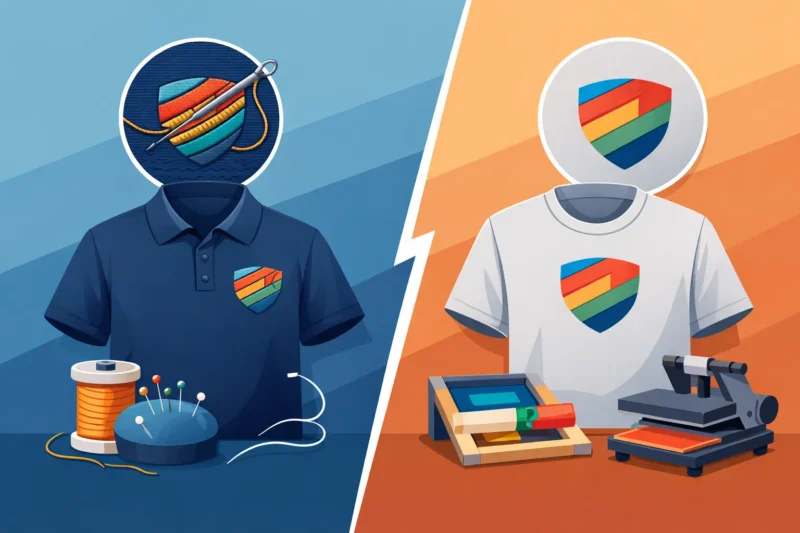
Embroidery applies a logo or design by stitching it directly into the garment. The result is textured, durable and typically associated with a more premium finish. It is often used on polos, shirts, fleeces, jackets, knitwear and heavier workwear where structure and longevity matter.
Printing places the design onto the fabric surface rather than into it. This can be done in different ways, including vinyl application and other print methods, depending on the garment and artwork. Printed branding can produce a clean, sharp result and is often well suited to lighter garments, larger logos and designs with more detail or multiple colours.
Neither option is automatically better. The right choice depends on where the uniform will be worn, how often it will be washed, what sort of logo you have and what standard of presentation your business needs to maintain.
When embroidery makes the most sense
Embroidery is often the preferred option for businesses that want a smart, established look. A stitched logo tends to carry a sense of permanence. On corporate uniforms, hospitality garments and outerwear, that can help reinforce a professional image without looking overly promotional.
It also performs well in harder-wearing environments. Industrial clothing, trade workwear and garments used outdoors are often washed frequently and worn under tougher conditions. A properly embroidered logo generally stands up well over time, which can make it a sound investment if garments are expected to stay in circulation for longer.
There is also a practical advantage in consistency. Once logo setup is complete, embroidery can be repeated accurately across large order volumes and repeat runs. For organisations managing uniform supply across multiple roles or sites, that matters. You want the finance team, warehouse staff and customer-facing employees all presenting the same brand standard, even if they are wearing different garment types.
That said, embroidery is not right for everything. On very lightweight fabrics, it can pull or distort the material. It is also less suitable for large chest prints, oversized back branding or artwork with very fine detail and colour gradients.
The strengths of embroidery
The main strength is durability. Stitching is less likely to crack, peel or fade in the way some printed finishes can over time. It also gives logos a tactile, high-quality appearance that works particularly well for businesses where trust, presentation and professionalism are central to the customer experience.
Embroidery can also help with perceived value. A branded shirt with a stitched logo usually looks more like part of a considered uniform programme and less like a promotional garment. For front-of-house teams, office staff, hotel teams and field-based managers, that can make a noticeable difference.
Where embroidery can be less suitable
Embroidery usually has limits on highly detailed artwork. Small text, intricate shading and complex graphic effects may not translate cleanly into thread. It can also add slightly more weight and structure to the garment, which is not always ideal on very lightweight performance clothing.
Cost can be another factor. While embroidery often proves economical over the life of the garment, initial unit pricing may be higher than simple print applications, especially on lower-cost garments or short-term use items.
When printed uniforms are the better fit
Printed branding is often the practical choice when your design needs flexibility. If your logo includes multiple colours, fine detail or a larger format, print can reproduce it more cleanly. It is particularly useful for T-shirts, teamwear, event clothing, promotional garments and lighter-weight workwear where a flatter finish is preferred.
Print is also often chosen when visibility matters. Large branding across the back, bold department labels or clear role identification can be easier to achieve with print than with embroidery. In some sectors, that is more than a style preference. It can support site organisation, public recognition and day-to-day practicality.
For businesses managing budget across large staff numbers, print can also offer cost advantages, particularly for high-volume orders on entry-level garments. If uniforms are changed regularly, issued seasonally or required for campaigns and events, printed branding can be the more efficient route.
Embroidered uniforms vs printed uniforms on cost, wear and appearance
Cost is usually where buyers start, but it should not be where the decision ends. A cheaper branding method is not necessarily better value if the garment needs replacing sooner or no longer looks presentable after repeated washing.
Embroidery often costs more per garment, but it tends to repay that over time on durable items such as polos, sweatshirts, softshells and outerwear. If your staff uniforms are expected to last and remain customer-facing throughout their life, the stitched finish can justify the spend.
Print can be more cost-effective upfront and better suited to larger artwork or lower-cost garments. For short-cycle clothing, promotional wear, casual teamwear or uniforms with frequent design changes, that flexibility can be commercially useful.
Appearance is equally important. Embroidery looks smart, structured and premium. Print looks smooth, graphic and often more modern. A corporate office may benefit from embroidered shirts and knitwear, while a warehouse team may need printed back logos and role identifiers on practical workwear. In many businesses, the answer is not one or the other across the board. It is a combination based on role.
Washing and long-term performance
Uniforms do not live in a showroom. They are worn on shift, washed repeatedly and expected to keep representing the business properly. That is where the garment and branding method need to work together.
Embroidery generally performs very well with regular laundering, especially on suitable garments. Printed finishes can also last well when the correct application method is matched to the fabric and care instructions are followed, but they may be more vulnerable to wear if the wrong print type is used for the job.
This is why supplier guidance matters. A logo is only one part of the decision. Fabric type, wash requirements, working conditions and expected garment lifespan all need to be taken into account before branding is applied.
How to choose the right option for your business
Start with the role the garment plays in your organisation. If the uniform is customer-facing, worn daily and expected to project a polished image, embroidery is often the safer choice. If the garment is lightweight, promotional, high-visibility or requires larger visual branding, print may be more suitable.
Then consider lifespan. Are you issuing a long-term uniform programme or ordering for a short-term requirement? The longer you expect garments to stay in use, the more value durability brings.
Artwork matters too. Simple logos often work well in embroidery. Complex designs with gradients, fine outlines or large filled areas may be better printed. It is also worth thinking beyond one department. If your business has office staff, drivers, warehouse operatives and site teams, a blended branding approach may give you the best balance of consistency, practicality and cost control.
For larger organisations, repeat ordering is another factor. Standardising branding decisions from the start helps avoid inconsistency later. That includes logo sizing, placement, garment selection and deciding where embroidery or print should be used by garment category. This is where an experienced uniform supplier can save time and reduce expensive rework.
At Select Branding Solutions, that practical approach is often what helps customers make the right call. The best branding method is not the one that sounds most premium on paper. It is the one that works reliably across your garments, your teams and your ordering process.
A commercial decision, not just a visual one
Uniform branding influences how staff feel, how customers respond and how often garments need replacing. That gives the choice real operational weight. If your priority is a durable, professional finish on long-term uniform items, embroidery is usually the stronger option. If you need flexibility, larger branding areas or a lower upfront cost on lighter garments, print can be the better fit.
The most effective uniform programmes rarely rely on guesswork. They are built around garment use, brand standards and the realities of day-to-day wear. Choose with those factors in mind and your uniforms will do more than carry a logo. They will support the way your business shows up every day.